HOW AI SEARCH WORKS
A customer asks. AI looks for evidence. An answer is built.
The exact systems differ, but the practical business lesson is consistent: clearer, accessible, well-supported information gives search systems more useful material to work with.
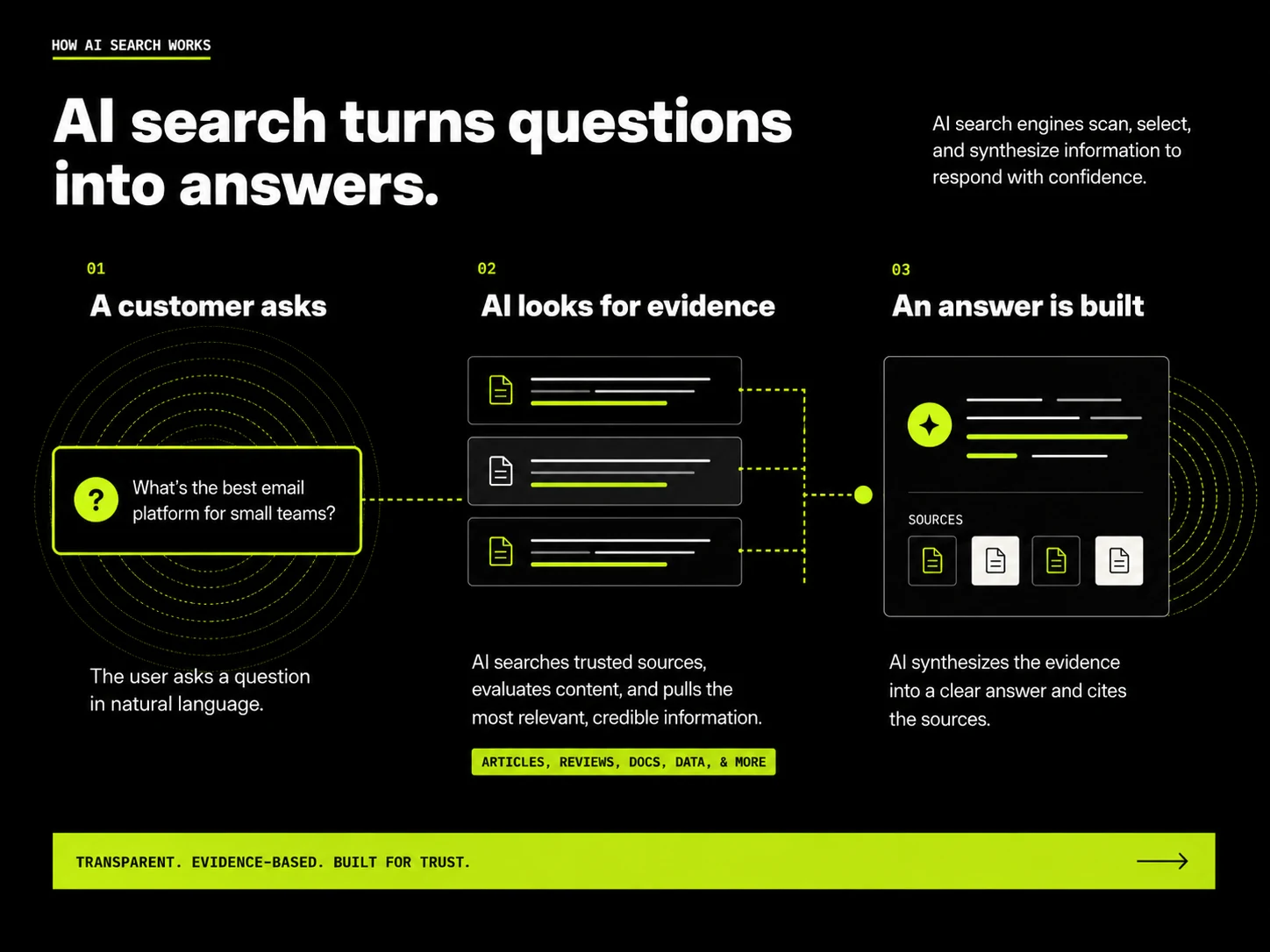
The question defines the need
Customers increasingly use full, conversational questions: who is best for a specific problem, what service fits a situation, or which provider has relevant experience.
The system gathers candidate information
Search and answer systems may use indexed pages, their own retrieval systems, third-party search partners, structured data, reviews, articles, official documentation, profiles, and other public sources.
Relevance and support shape the response
A business is easier to consider when its pages directly answer the question and when the surrounding public record supports the same facts.
The answer can change
Results vary by platform, location, wording, timing, personalization, and the information available at that moment. That is why testing and ongoing accuracy matter.
What a business can control
- Whether important pages are crawlable and indexable
- Whether the site clearly states services, customers, locations, expertise, and proof
- Whether direct answers exist for high-value customer questions
- Whether facts are consistent across the website and credible public profiles
- Whether legitimate news, articles, and third-party mentions create an accurate public record
- Whether outdated or contradictory information is corrected
Official platform references
The technical claims on this page are checked against primary platform documentation. These sources explain what site owners can control and what the platforms still decide independently.